
How Arrest Warrants Work in Scott County
In Scott County, a judge of Scott Circuit Court or Scott Superior Court may sign an arrest warrant after reviewing a sworn complaint, a probable-cause affidavit, or other information Indiana law allows. Probable cause means facts supporting a reasonable belief that an offense occurred and that the named person committed it. The signed order authorizes an arrest. The public record usually begins elsewhere. The Scott County courts directory identifies the Circuit and Superior courts, while Indiana's MyCase portal can display a case summary and its chronology of entries. MyCase is not a statewide warrant search. It tracks cases, not live warrants. Enforcement is a separate question. The Scott County Sheriff's Office confirms whether an order remains active.
Scott County Arrest Warrant Courts
Scott County arrest warrant records can begin in either court. Circuit Court stamps its cases 72C01, while Superior Court uses 72D01. Those codes help separate cases with similar party names in MyCase. The Clerk keeps the court file. The Sheriff handles local enforcement and service.
Scott County Clerk
1 East McClain Avenue, Suite 120, Scottsburg. Call 812-752-8420 for the case record, cause number, and filed documents.
Scott County Sheriff
111 South First Street, Scottsburg. Call 812-752-8400, available 24 hours, to ask about current warrant status.
These Scott County offices answer different questions. A court entry documents the case, while the Sheriff's confirmation tells you whether the warrant is still active for enforcement.
Arrest Warrants: What They Contain
The Scott County Sheriff's FAQ lists four practical fields callers may ask about: warrant date, charge, bond, and issuing court. The filed warrant may hold more. A cause number helps most. It ties the warrant question to the right court file.
| Cause or Warrant Number | Connects the order with its Scott Circuit or Superior Court case. |
|---|---|
| Named Subject | Identifies the person the warrant authorizes officers to arrest. |
| Charge / Offense | States the alleged offense tied to the probable-cause finding. |
| Issuing Judge / Court | Shows which court controls later appearances, filings, and recall questions. |
| Bond / Bail Set | Shows a set amount or indicates that bond awaits an initial hearing. |
| Date Issued | Helps separate a current order from an older or resolved case event. |
Read the fields together, not one at a time. A name match alone can mislead. Without the right birth details or cause number, you may be looking at someone else's Scott County warrant. Bond amounts can change after a hearing. An old issuing date does not prove the order is still live, and only the issuing court can confirm, recall, or quash it. When you call the Scott County Sheriff, repeat each field back and note the time of confirmation. With the Clerk, ask whether a recall, quash order, or new setting appears in the court chronology.
Scott County Confidential Warrant Records
A blank result proves nothing. Indiana court-access rules allow some arrest-warrant case records to stay temporarily excluded from public access before an arrest. Sealed files, recently filed matters, and records held by another agency can also drop out of a routine name search. Scott County searchers meet this wall often. The Indiana court-record exclusion rule explains when access can be delayed and how an arrest changes that status. The broader public-access rule governs court records generally. It does not promise instant online results. The official MyCase search view makes the point plainly: online access begins as a case inquiry, not a warrant roster.
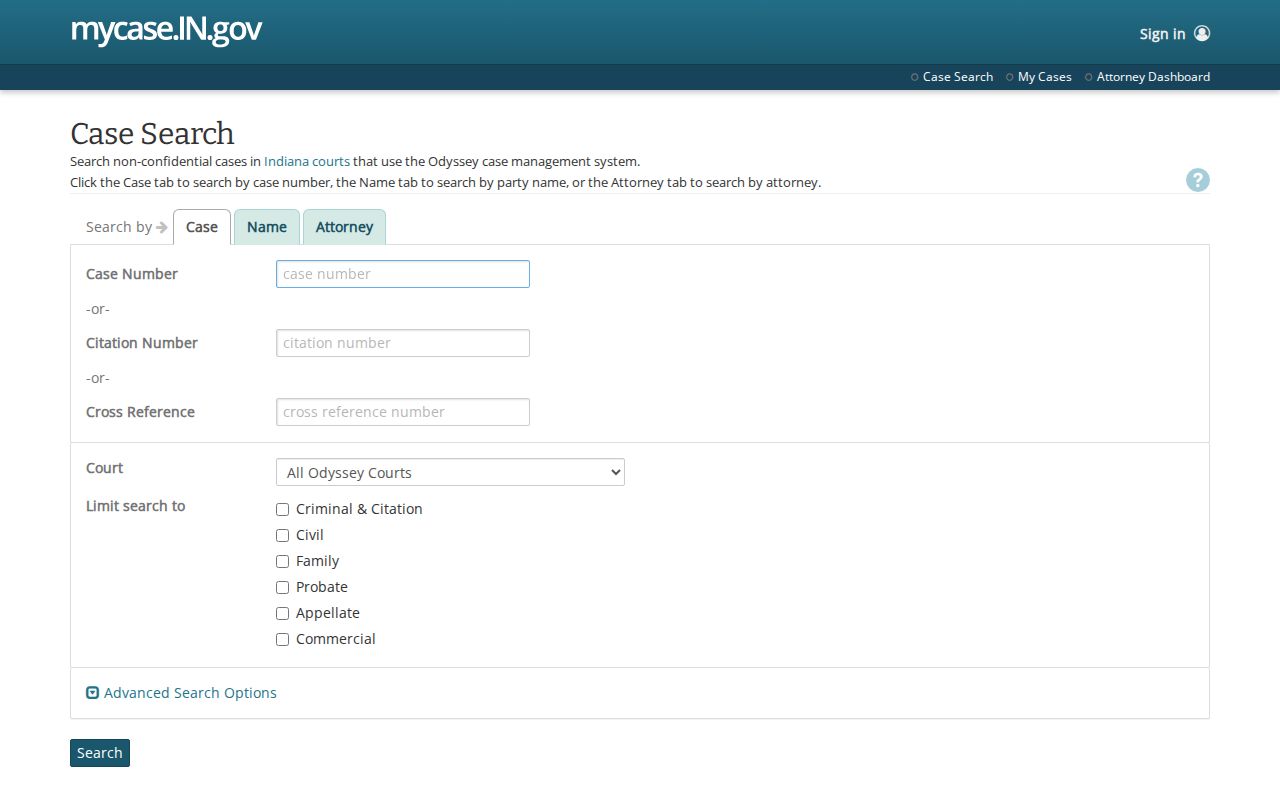
Treat the rule as an access map, then ask the Scott County court or Sheriff about the specific record you need.
How Warrants Get Served in Scott County
The Scott County Sheriff and other officers may execute an active arrest warrant. Service can happen almost anywhere. A traffic stop, a field contact, an agency visit, or a planned surrender all count. After verifying the order, the officer arrests the named person and brings them to the Security Center for booking. The case then returns to the issuing court. Bond may follow the local schedule. It may instead be set at an initial hearing. Scott County runs no special public walk-in warrant desk. Call before you appear. Sheriff staff communicate with visitors through an intercom and in person at the controlled facility. Note: Another agency may hold its own report even when the Scott County Sheriff confirms the warrant.
Offline Scott County Arrest Warrant Checks
The Scott County Sheriff's warrant page can go down for maintenance, displaying a "Warrants Offline For Maintenance" banner. When reachable, its disclaimer gate warns that online material cannot certify accuracy or authenticity without independent confirmation. Skip the commercial people-search services.
- Search MyCase by legal name or cause number for the related Scott County case.
- Call the Clerk at 812-752-8420 for the official court file and issuing-court details.
- Call the Sheriff at 812-752-8400 to ask for the date, charge, bond, issuing court, and current enforcement status.
- If city police or another agency began the matter, request that agency's own incident record separately.
No single Indiana public database promises a complete statewide warrant check, so each Scott County step answers only part of the question.
Arrest Warrants, Summonses, and Bench Warrants
The label changes what the order demands. An arrest warrant rests on probable cause for an alleged offense. A summons only directs an appearance, with no custodial arrest. A bench warrant usually follows a missed court duty inside an existing case. For that court-process distinction, see the Scott County bench warrant lookup.
| Feature | Arrest Warrant | Summons | Bench Warrant |
|---|---|---|---|
| What It Orders | Custodial arrest | Appearance without immediate arrest | Arrest for a missed court duty |
| Basis | Probable cause of an offense | A charge handled first by notice | Failure to appear or comply |
| Who Issues It | Judge | Court through lawful process | Judge in the existing case |
| Response | Counsel, surrender, and bond plan | Appear on the stated date | Ask about appearance and recall |
Scott County Arrest Warrant Bonds
Bond can free a person while the charge is pending. It does not erase the arrest warrant history. The court dates still stand. On a weekday, the Clerk handles inmate bond transactions until 4:00 p.m., and after hours or on weekends the Security Center lobby kiosk is the option. The Scott County Sheriff's bond information page covers cash, percentage, and corporate surety bonds, and it posts the kiosk fees that may apply. Confirm the bond before you bring money. When a warrant lists no bond, the first hearing may decide the release terms.
- Recall
- A court withdraws its own warrant.
- Quash
- A court sets the warrant aside by order.
- Bond
- A release condition that helps assure later appearance.
- Initial hearing
- The first court appearance where rights and release terms may be addressed.
Timing decides where a Scott County bond gets paid. Weekday transactions go through the Clerk. Nights and weekends point to the Security Center kiosk. Card and kiosk fees can apply, so confirm the current schedule and the exact amount before you set out. A receipt documents the payment, but it does not end the obligations. The person must still follow every release condition and show up for each court date tied to the cause number.
Handling an Arrest Warrant in Your Name
Start by confirming the Scott County arrest warrant with both the court record and the Sheriff. Write down the cause number, charge, issuing court, warrant date, and bond information. An attorney can then call the issuing court, ask whether surrender can be arranged, and see whether a motion to recall or quash is on the table. Recall means the court withdraws the order. Quash means the court sets it aside. Surrender and posting bond are practical routes in Scott County. Neither step should be improvised, so call ahead to learn where to report and what identification or payment to bring. After release or a court order, confirm the Scott County case record and the Sheriff's status reflect the change. Keep your proof of payment. Save every new hearing notice. A recall or quash motion is a request. The issuing judge decides whether the facts and the law support the order. Counsel can review the case and file in the right cause number. Personal appearance may still be required. Until the court acts and enforcement records update, treat the confirmed Scott County warrant as active. After any hearing, get a copy of the signed order. Then check the chronological case summary for the matching entry.
Important: Speak with a lawyer before surrendering. An active arrest warrant may be served during any verified law-enforcement contact.
Scott County Arrest and Tax Warrants
An Indiana tax warrant is a lien. No deputy arrests you over one. The state's e-tax warrant system runs these civil collection records through a separate process. Keep them out of a Scott County warrant lookup. Indiana's official Rule 4 page sets the public-access framework that keeps court-record questions distinct.
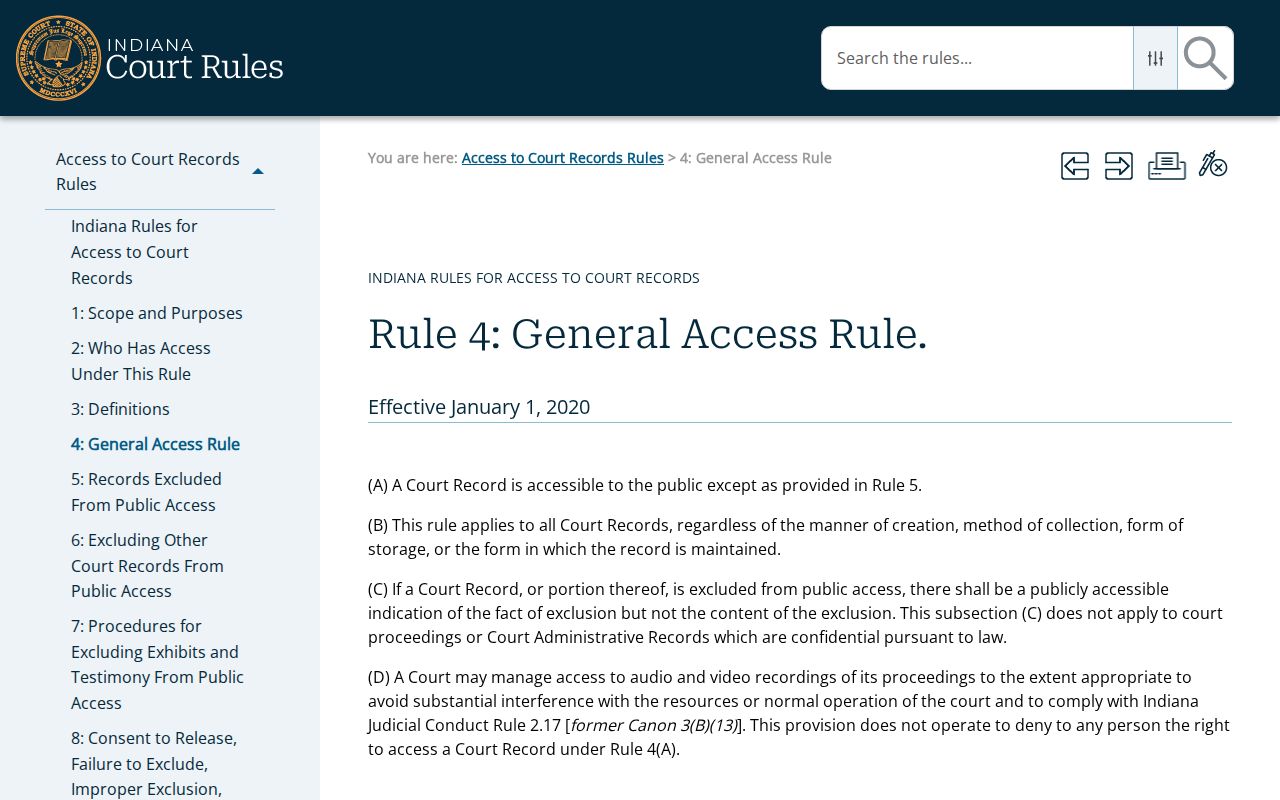
Use the issuing document and agency name to tell which process applies.
Scott County Arrest Warrant Access Limits
Indiana presumes public access to many court records. Confidentiality, sealing, the filing stage, and the type of document can each limit what you actually see. The MyCase search tips explain name and date-of-birth narrowing plus court, case status, and date filters. Those filters find cases. They do not build a Scott County warrant roster. A same-name match proves nothing.
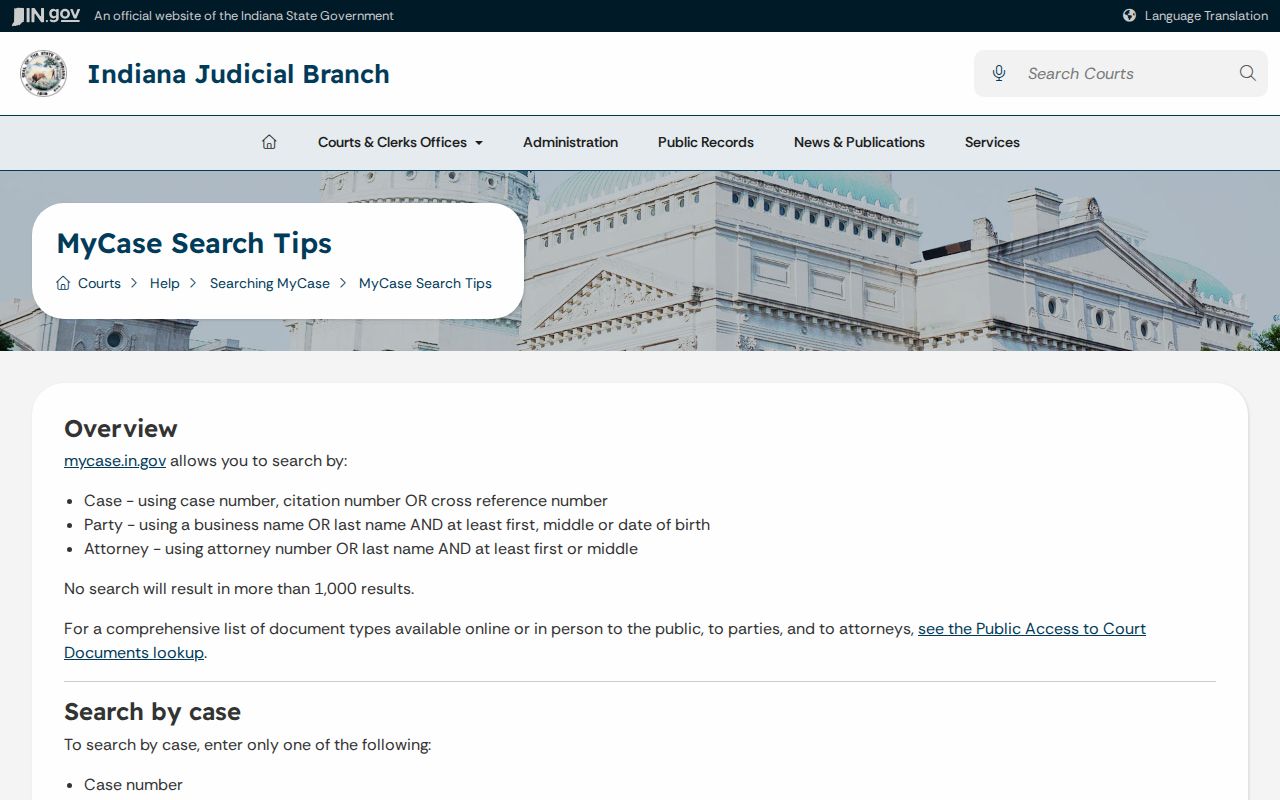
Confirm identity and status with the source office before relying on a result.
Scott County Arrest Warrant State Search
Indiana's official warrant-search FAQ states that there is no single statewide public warrant search.
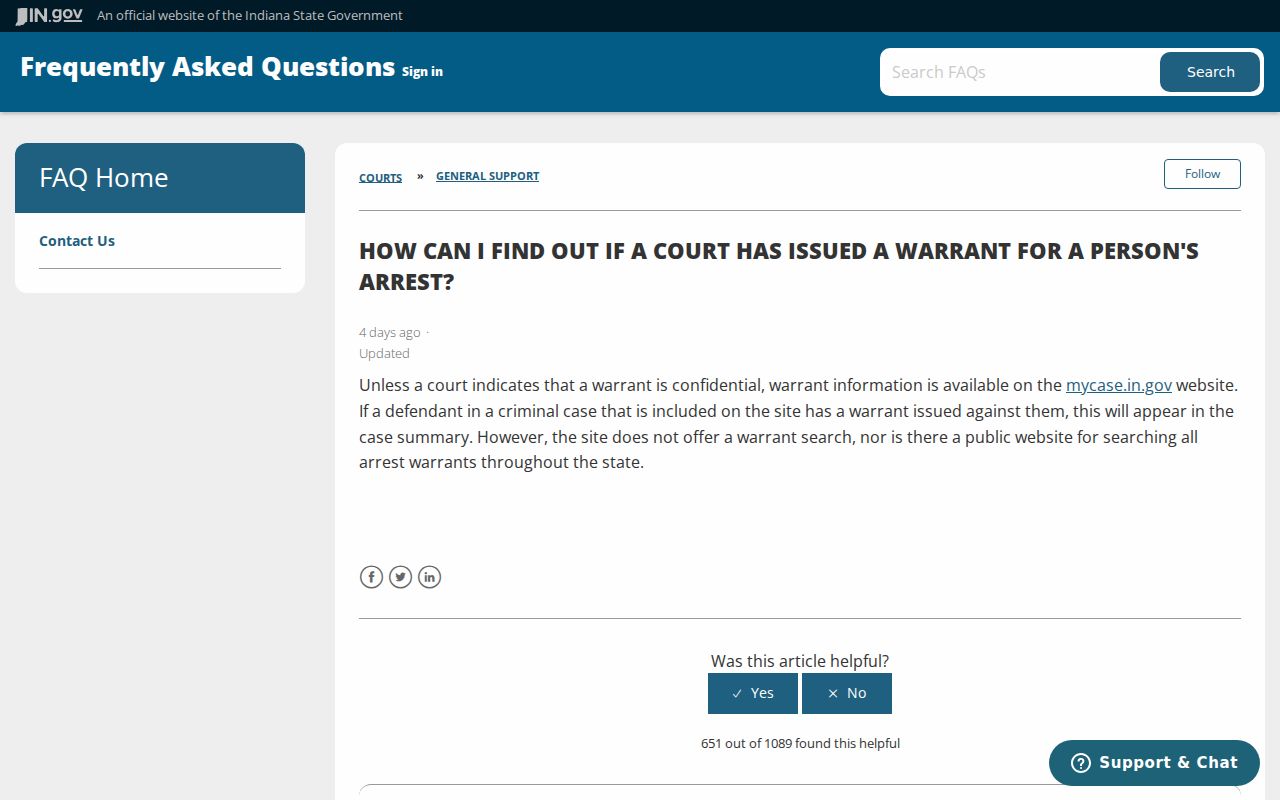
That gap makes direct confirmation with the Scott County Clerk and Sheriff essential. Use search fields to narrow, never to accuse. Start with a full legal name. Add a middle name or date of birth where the system allows it, and filter to Scott County when it fits. A similar name is not enough. If a hit appears, compare the cause number, court code, filing date, and charge against what you already know. Then call the proper office.